
Game Characters
All characters have strengths and weaknesses that must be observed at all times in the game, as some cards have different effects for each.

Cards
At the heart of Rivals of Discovery lies a dynamic deck of beautifully illustrated cards that drive every expedition decision. Each card represents opportunity, risk, or ambition.
Will you build the most prestigious catalog… or will you outmaneuver your rivals before they do the same to you?
Red point
Numbered red point
Yellow point

You must draw a card from the deck, which can bring good or bad news. Luck or bad luck!
Yellow point
Numbered red point
Yellow point

You have found a new species and, based on the region indicator and rarity level, you must draw the first corresponding card from the deck. For example: landing on a space with the value A3, you must look for the first card in the deck that has the same symbol.
Numbered red point
Numbered red point
Numbered red point

You must draw a card from the deck, which can bring good or bad news. Luck or bad luck! But also, you have found a new species and, based on the region indicator and rarity level, you must draw the first corresponding card from the deck. For example: landing on a space with the value A3, you must look for the first card in the deck that has the same symbol.
White point
Skull with splash
Numbered red point

Nothing happens when you land on this point; it is simply part of the path.
Diamond
Skull with splash
Skull with splash

You must draw a bonus card (relic) from the artifact deck.
Skull with splash
Skull with splash
Skull with splash

This space indicates an encounter with hostile tribes patrolling the region. If you stop on this space, you must turn back on your path.
Skull
Dead end
Dead end

You cannot stop on this space, as it indicates danger. If you did not get enough points on the dice to pass all danger spaces, you must go back to the previous white space. If someone already occupies that space, then you must go back one more space, until the next available white space.
Dead end
Dead end
Dead end
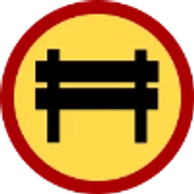
This symbol indicates the end of a trail. Upon reaching it, you must stop, disregard all remaining points obtained on the dice, and the next move will only be made in the next round, with a new dice roll, starting the trail from the Dead End point.
Prison
Dead end
Prison

This symbol indicates the end of a trail. Upon reaching it, you must stop, disregard all remaining points obtained on the dice, and the next move will only be made in the next round, with a new dice roll, starting the trail from the Dead End point.
Rail
Parachute
Prison

This symbol indicates a landing point if you are using the train as transport. ATTENTION: you cannot board the train on this space; you can only get off the train here, ending your journey. In other words, you cannot start a train journey from this symbol.
Parachute
Parachute
Parachute

This symbol indicates a jump point if you are using the airplane as transport. ATTENTION: you cannot board the airplane on this space; you can only get off the airplane here using a parachute, ending your journey. In other words, you cannot start an air journey from this symbol.
Anchor
Parachute
Parachute

This symbol indicates a landing point if you are using a boat as transport. ATTENTION: you cannot board a boat on this space; you can only get off the boat here, ending your journey. In other words, you cannot start a boat journey from this symbol.
Airplane
Airplane
Airplane

The airplane symbol indicates that, if you have an air transport card, you can use it to start a journey and quickly travel long distances, heading to another airport or getting off at one of the jump points.
Boat
Airplane
Airplane

The boat symbol indicates that, if you have a water transport card, you can use it to start a journey and quickly travel long distances, heading to another port or getting off at one of the landing points.
Train
Airplane
Train

The train symbol indicates that, if you have a rail transport card, you can use it to start a journey and quickly travel long distances, heading to another station or getting off at one of the landing points.
Start of the game

Game setup
- Separate the character cards face down to hide them, and allow each player to choose their character without being able to see the card. Observe your character's characteristics, as all have strengths and weaknesses, which can be decisive in the match.
- The player must keep the chosen character card with them, which does not need to be in secret.
- Each player must also choose a pawn.
- It is recommended that you separate the animal cards into four distinct groups to make it easier when looking for cards in the deck. Separate them according to the rarity indicator 4, 3, 2, and 1, for example, all cards like A3, B3, C3, and D3 together in the same group, or A2, B2, etc. in another. With this, you will have four distinct shuffled stacks of cards, facilitating the search for cards during the game.
- Separate the stacks of cards containing the shuffled animal cards. These stacks should be face up, displaying their content, so that you can find the next card corresponding to your stopping point. When landing on a numbered yellow or red space, the player must take the first card from the deck that has the same symbol.
- Separate a stack of shuffled cards containing all the action cards (which have an "A" indicator on top, on the right side of the card), and all the bad luck cards (which have a small hand with the thumb pointing down). This stack should be face down, hiding its content and its sequence. When landing on a red or numbered red space, the player must take a card from the top of this stack.
- Separate a stack of shuffled cards containing all the artifact cards, containing the nuggets, diamonds, and all objects of value that are considered the game's bonuses. This stack should be face down, hiding its content and its sequence. When landing on a space with the diamond symbol, the player must take the card from the top of this stack.
Starting point
All participants must start the game from the village.
Who starts the match?
- Players must compete on the dice, and the player who gets the highest number must start the match, followed by clockwise order.
- Each player decides their strategy and the region of the board they wish to visit.
- The player who starts the match rolls two dice to move, choosing the direction to follow.
The Village
You can pass through the village to register animal cards and deposit precious objects in the bank. In this way, registered cards can no longer be stolen.
Important: You must separate these cards in a separate stack, as they should no longer mix with new cards you may receive.
Important: New cards obtained after passing through the Village can be stolen.
Action, transport or event cards cannot be registered.
Who wins the game?
The winner is the player who manages to return to the village with an accumulated final value of $800, including discoveries and precious items.